Heat Engines
What is a heat engine?
An engine is a machine that turns the energy locked in fuel into force and motion.
Since engines work by burning fuels to release heat, they're sometimes called heat engines.
There are two main types of heat engines: external combustion and internal combustion.
-
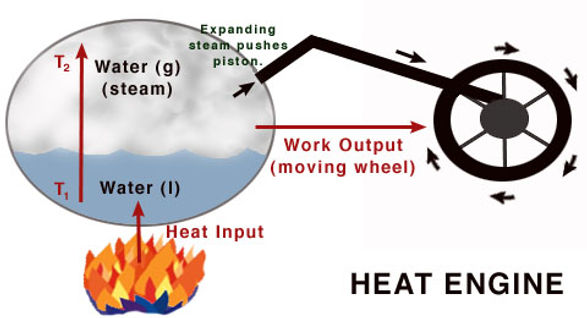
In an external combustion engine, the fuel burns outside and away from the main bit of the engine where the force and motion are produced. A steam engine is a good example: there's a coal fire at one end that heats water to make steam. The steam is piped into a strong metal cylinder where it moves a tight-fitting plunger called a piston back and forth. The moving piston powers whatever the engine is attached to (maybe a factory machine or the wheels of a locomotive). This is an external combustion engine because the coal is burning outside and some distance from the cylinder and piston.
-
In an internal combustion engine, the fuel burns inside the cylinder. In a typical car engine, for example, there are something like four to six separate cylinders inside which gasoline is constantly burning with oxygen to release heat energy. The cylinders "fire" alternately to ensure the engine produces a steady supply of power that drives the car's wheels.